Being Militant About Our Stories: Why Gloria Naylor’s Words Still Resonate Today
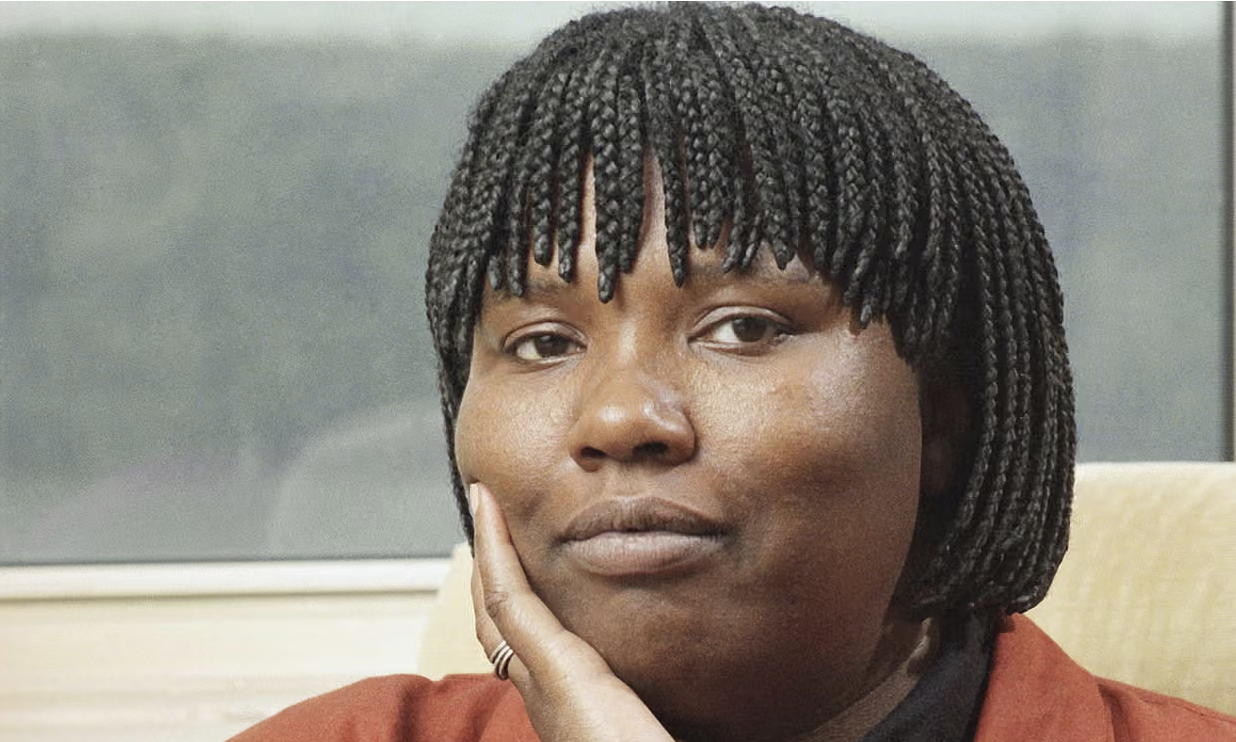
During my recent conversation with Rhonda Sewell, Director of Advocacy & External Affairs at the Toledo Museum of Art, we reflected on a powerful declaration by writer Gloria Naylor—one that continues to echo across the cultural landscape:
“I’m militant about the validity of our stories.”
— Gloria Naylor
This quote really reasonated with me, and I have not been able to stop thinking about it since we have discussed it. This statement isn’t simply literary wisdom—it’s a rallying cry. A reminder that the preservation of our narratives is an active, ongoing struggle. And today, as the nation grapples with shrinking arts budgets, legislative attacks on cultural expression, the whitewashing of historical exhibits, and the removal of sociopolitically relevant artworks from museums, Naylor’s words feel like instructions for survival.
A National Moment of Cultural Retraction
As Rhonda and I discussed, the United States is entering an era where institutions are increasingly pressured to soften, sanitize, or erase certain histories in the name of “comfort” or “neutrality.” From book bans to curriculum restrictions to museum controversies, decisions about what gets displayed, taught, or funded are becoming battlegrounds.
That erosion of access to truth—through art, through culture, through historical context—is exactly the danger Naylor warned us about. Valid stories don’t just naturally endure. They must be protected, defended, and kept visible, especially when systems lean toward erasure.
Artists as the First Responders to Erasure
Historically, artists across many cultures have always served as frontline defenders of the truth. When institutions remain silent, artists speak. When history becomes distorted, artists correct the record. When society becomes numb, artists provoke feeling.
Today’s contemporary artists continue that lineage with profound relevance and urgency.
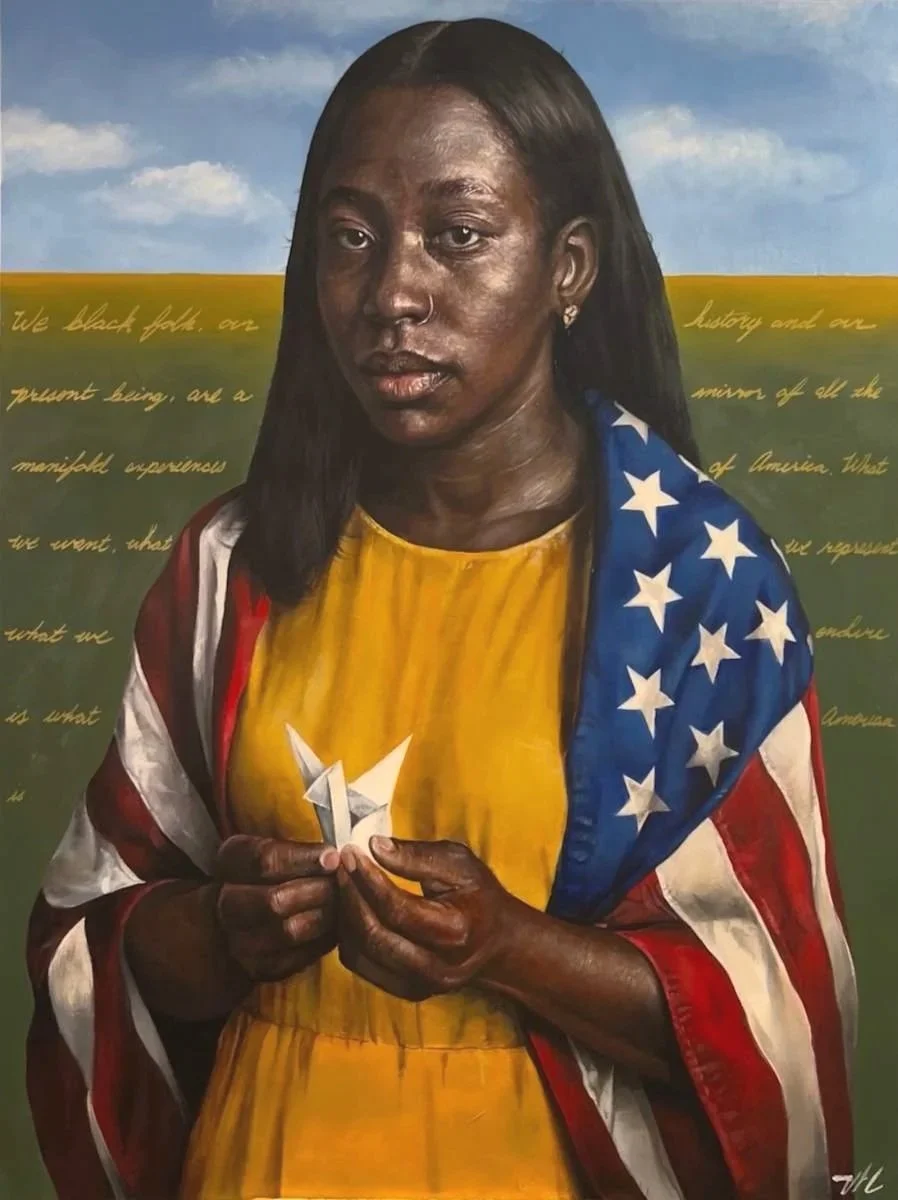
Nate Austin’s “The Weight of America”
Austin’s powerful painting captures the crushing emotional, social, and political pressures carried by Black Americans. The piece is a raw visual testament to generational trauma, systemic burdens, and endurance. In a time where certain narratives of race and inequality are being politically minimized, Austin’s work interrupts the silence. It refuses erasure. It insists that the weight be seen.
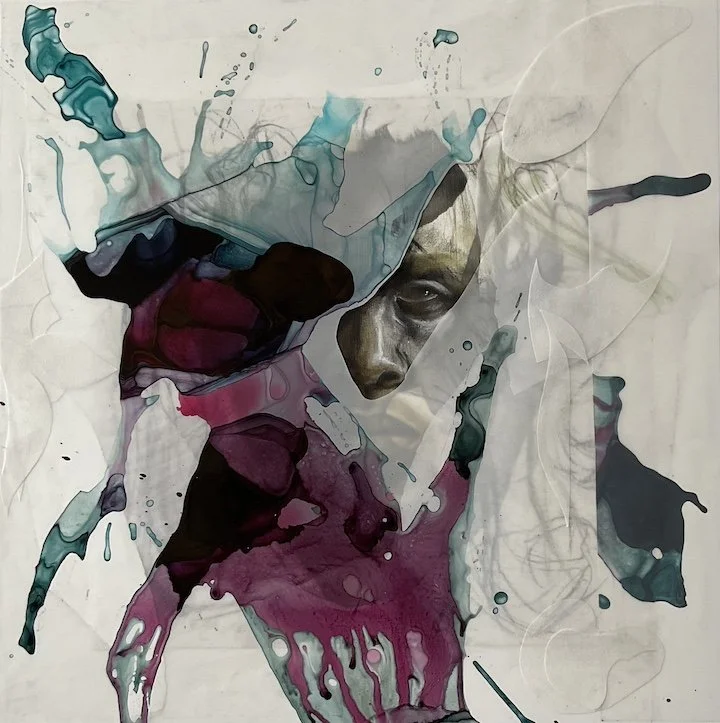
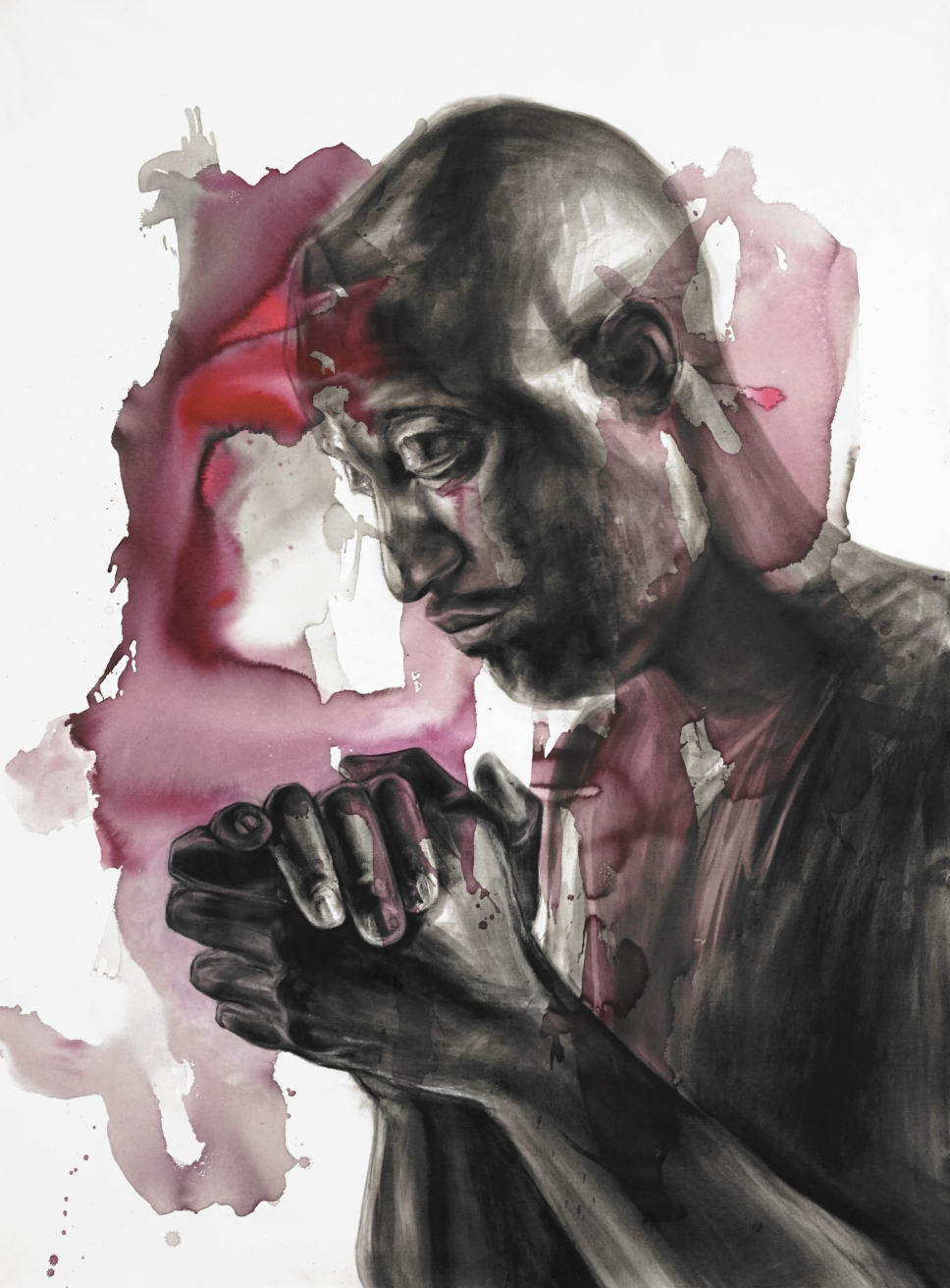
Imo Nse Imeh’s “Monuments to Our Skies” Project
Imeh’s work builds new monuments—not in bronze or marble, but through painted and conceptual forms that honor Black existence, resilience, and aspiration. His project, Monuments to Our Skies, is an amalgam of two new series that consider Black identity within the boundless frameworks of science, faith, and divinity.
In a cultural moment where actual monuments are debated, relocated, or contested, Imeh constructs visual testaments that re-center African diasporic presence in the narrative landscape. His art is a direct act of reclamation.
Both artists—each in their own language—illustrate what Naylor meant by being “militant” about our stories. Their work pushes against erasure, insists on visibility, and functions as cultural memory carved in paint and power.
Museums as Storytellers With Responsibilities
Rhonda Sewell’s advocacy work highlights a critical truth: there is no such thing as a neutral museum. Every exhibition, acquisition, label, or exclusion is a choice—a form of storytelling. And in a moment where honesty is contested, cultural institutions must decide whether they will be complicit in erasure or active in truth-telling.
Museums must be:
Protectors of narratives that dominant culture may try to erase
Partners with artists who challenge narrow perspectives
Anchors for communities seeking accurate representation
Spaces where difficult histories are explored, not avoided
This work requires courage. It requires intentionality. And it requires a recognition that history isn’t static—it’s something we continually shape and confront.
Militancy as Cultural Care and Stewardship
To be “militant” about our stories, as Naylor insists, is not about aggression—it is about devotion. It is the decision to protect what might otherwise be lost.
This militancy shows up in many forms:
An artist creating work that exposes hard truths
A curator choosing to foreground marginalized histories
A museum resisting external pressure to censor cultural expression
A community demanding accurate and inclusive representation
Militancy, in this context, is a form of love—love for our ancestors, our identities, our communities, and our future generations. It is a refusal to allow our cultural DNA to be edited.
The Call Forward: Our Stories Are Worth Fighting For
As arts funding tightens, as narratives become politicized, as exhibitions come under scrutiny, and as history itself is reshaped by competing agendas, Naylor’s charge becomes our responsibility.
We must be fierce guardians of our stories.
Artists like Nate Austin and Imo Nse Imeh show us that resistance is not only possible—it is thriving. Museums and cultural leaders like Rhonda Sewell remind us that institutions can choose courage over comfort. And community advocates across the nation prove daily that storytelling is not a passive act—it is an assertion of existence.
Our stories are our truth, our legacy, and our inheritance.
They deserve militancy.
They deserve protection.
And they deserve to be told—fully, honestly, and unapologetically.